Ninurta the Star, Arrow and King of Hades
Chapter 16 of Corrupting the Image vol 2: Ninurta the Star, Aroow and King of Hades [Part-2]
NERGAL ON A KUDURRU STONE
In 1882, a Limestone kudurru stoneclxv was found in ancient Sippar, southern Iraq, from the Kassite period circa 1186 BC-1172 BCclxvi and is now housed at the British Museum. (See figure 55). The creature on face A (of four sides) is Pabilsag / Nergalclxvii. The Museum describes the:
Composite being, in the form of a centaur, with attributes of man, beast, bird and reptile. The god has two heads, one human, with beard and thick hair falling on the shoulders, and on it he wears a conical head-dress probably provided with horns; the second head, facing backwards, is that of a lion. The god’s torso and arms are human, and he is represented drawing a bow; ends of five arrows in a sheath are visible over his right shoulder. The body, hind legs, the lower tail, and the upper part of the fore legs are those of a horse; a second tail is that of a scorpion, and the fore legs end in scorpions, though only one scorpion is shown. Wings rise from the horse’s shouldersclxviii (Emphasis mine).

Figure 56 Pabilsag from a 12th century entitlement (Kudurru) Stone.
Here is a tracing, Figure 56 of the inscription to better bring out the details. Notice that the centaur-beast is an archer with a bow and arrow drawn. One of his tails is a scorpion’s tail. The forward feet are those of a horse, yet he has the face of a man. Gavin White notes:
Although the basic image of the horse-centaur can only be traced back to the middle of the 2nd millennium (the Kassite period), the figure is undoubtedly older as the constellation name appears in the star-lists of the preceding Old Babylonian period. A potentially older form of the Archer that doesn’t have any horse characteristics can also be found on entitlement stones.
It combines the features of a human archer with a scorpion’s body and birdlike feet. Very similar creatures first appear in Akkadian artwork where they can have wings and often have a snake-headed phallus. clxix
The iconography for Pabilsag / Ninurta is incredibly revealing of future events, especially when we remember that Pabilsag / Ninurta / Nergal is the god of the underworld. We are told specifically in Revelation 9 that a king of the underworld is going to acquire the key and open the Abyss (Hades). What is more startling is that the iconography of Pabilsag / Nergal on at least one stone, is a perfect match of the creatures prophesied to come out of the Abyss.
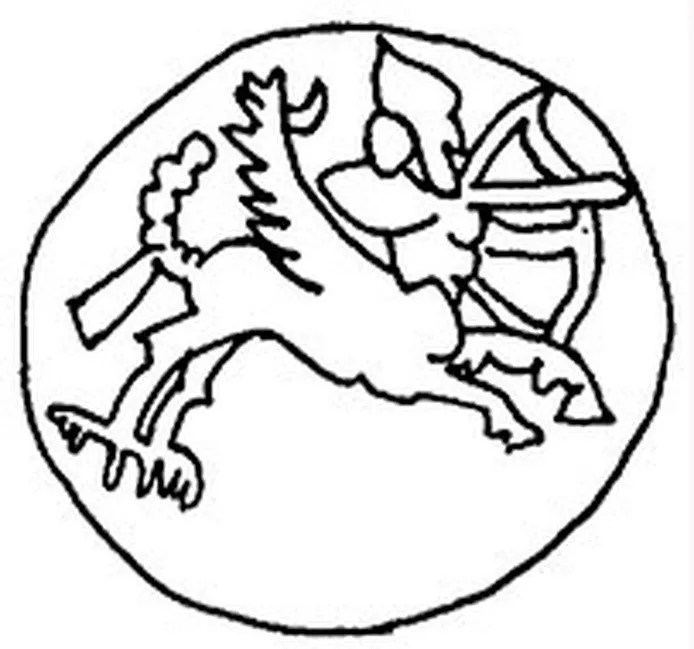
Figure 57 An impression from an Uruk seal.
Thus, the deity that Israel encountered and then embraced and carried around was Ninurta, who was none other than the rebel Nimrod who became a gibbor! The image of a “an archer with bow and arrow” of course, draws our attention to John’s Revelation where he “looked, and behold, a white horse. He who sat on it had a bow; and a crown was given to him, and he went out conquering and to conquer” (Rev 6:2). (See Figure 57). Ninurta / Nergal / Pabilsag is clearly identified as the warrior who conquers and is identified as the star Sirius; and, by the time of the Greeks, he would be known as Sagittarius.clxx An ancient Assyrian letter describes Ninurta’s constellation qualities as the arrow and as Sagittarius. Amar Annus explains: “the arrow (šiltahu) of Sagittarius (PA.BIL.SAG) stands within the halo of the moon … Both Sirius and Mercury are thus ‘arrows’ of Ninurta and also his manifestations.”clxxi In Revelation, we read about a “star” that has the key to the Abyss and reigns as king over those who come out.
And I saw a star fallen from heaven to the earth. To him was given the key to the bottomless pit (Rev 9:1). Then out of the smoke locusts came … (Rev 9:3). And they had as king over them the angel of the bottomless pit, whose name in Hebrew is Abaddon, but in Greek he has the name Apollyon (Rev 9:11).
The star that fell was given the key to open the Abyss and is king over the Abyss. His name is Abaddon in Hebrew, and Apollyon in Greek, but both mean the same thing: destroyer.clxxii We know that stars are defined as angels in Revelation (See Rev 1:20) and of course, we have learned that fallen angels are known as the gods of the pagan world. Thus, it follows that the star that falls to Earth is not a meteorite or other such body, but instead, is an angelic (demonic) entity. The entity is known as a Star, a Destroyer, a King and underworld god. We have seen all of these qualities throughout our study. The star “fallen from heaven to earth” is Satan / Enlil / Ninurta (son of Enlil) / Nimrod / Nergal / Pabilsag, and “to him was given the key to bottomless pit.”
| Composite Image of the Chimera in Revelation 9clxxiii | |
| 9A (Rev 9:7–10) 1st Description | 9B (Rev 9:17–19) 2nd Description |
| The shape of the locusts was like horses prepared for battle. On their heads were crowns of something like gold, and their faces were like the faces of men (Rev 9:7). They had hair like women’s hair, and their teeth were like lions’ teeth (Rev 9:8). And they had breastplates like breastplates of iron, and the sound of their wings (Rev 9:9) They had tails like scorpions, and there were stings in their tails. Their power was to hurt men five months (Rev 9:10). | And thus I saw the horses in the vision: those who sat on them had breastplates of fiery red, hyacinth blue, and sulfur yellow; and the heads of the horses were like the heads of lions; and out of their mouths came fire, smoke, and brimstone (Rev 9:17). the fire and the smoke and the brimstone which came out of their mouths (Rev 9:18). For their power is in their mouth and in their tails; for their tails are like serpents, having heads; and with them they do harm (Rev 9:19). |
Table 7 Composite Image of the Chimera in Revelation
In Revelation 9, John sees locusts that come out of the Abyss but, unlike locusts, these creatures (two-hundred million of them) look like a horse, have a lion’s head, man’s face, wings and two tails. While many commentators see two different kinds of creatures in Revelation 9, there are really just two descriptions of the same creature. I have placed the descriptions from Revelation 9A (Rev 9:7–10) and Revelation 9B (Rev 9:17–19) side by side in a table to help us see the common features.
Rev 9A specifically describes horses; Rev 9B says the “heads of the horses”. That common feature indicates that both sections have horses. Rev 9B then assumes we know they are horses. Notice also Rev 9A mentions “lion’s teeth”, and Rev 9B says “heads of lions”. The two sections are giving complimentary descriptions of the type of creature that comes out of the Abyss in Revelation 9; and Revelation 17 informs us that it will be the Beast that was, is not, and will ascend out of the Abyss.
Both 9A and 9B describe a chest area (thorax) clxxiv of iron or as strong as iron. 9B tells us the color, 9A tells us about the quality; they are complimentary and not contradictory.
We see horses with lions’ heads breathing fire, where we are told out of the heads of the horses were heads like the heads of lions and are out of their mouths came fire, smoke and brimstone. This army of 200 millionclxxv horse-chimeras, (not Chinese soldiersclxxvias was erroneously postulated in the 70’s, but horse-like beingsclxxvii) that have a head of a lion and a face of a man, with mouths that discharge fire.
Both 9B and 9A describe their tails; these tails are going to terrorize men. 9B states:
By these three plagues a third of mankind was killed—by the fire and the smoke and the brimstone which came out of their mouths. For their power is in their mouth and in their tails; for their tails are like serpents, having heads; and with them they do harm (Rev 9:18).
If we then compare this passage to Revelation 9A, we see 9A says they had tails like scorpions, and there were stings in their tails. Their power was to hurt men for five months. Both passages illustrate beastly killing-machines that strike mankind with their fiery mouths and scorpion tails. They cause painful injuries, and as a result one-third of mankind is killed.
Do not forget that at this time, after taking the Mark of the Beast, men will want to seek death and will not be able to find it; They will desire to die, but death will flee from them (Rev 9:6).
9A and 9B are actually a composite image. That is, the descriptions of the beasts overlay one another and create a greater image. For example, animators use the layering technique to create a composite. Only when the layers are combined do we get the full sense of what the image is supposed to look like. Thus, 9A gives us a description. And then in a recapitulation, that is, John goes back and says it again, but with variant details. Yet, the details from both passages are needed to complete the picture. When we view the composite image that John saw; amazingly, it is a perfect depiction of Pabilsag / Nergal (Ninurta).
The features of the ancient hybrid beast are a perfect match with the coming hybrid beasts who will swarm out of the Abyss. Satan has engineered hybrid chimeras which he will muster to form an army of 200 million. (See Appendix 8 Joel’s Army). The complexity of the creature and the number of years that have elapsed tells us Satan has been planning for an invasion for a long time. Nergal (Pabilsag) was known as a destroyer: “May Nergal in his destruction not [spare(?)] his offspring!” Furthermore, the word of his epithet “‘the strong god’… is derived from Semitic HRR ‘to scorch’.” Lastly, Wiggenner also notes, “Nergal’s planet is Mars (Salbatanu). According to astrological omens, Mars spreads death when he rises or flares up (von Weiher, Nergal 76ff.), and a tentative etymology explains this role of MUL tzal (sal) bat-a-nu as mushtabarru (ZAL) mutanu (BAD-a-nu) “(the planet) which spreads plague”.clxxviii
Across is a table comparing the Kudurru Stone inscription and the image from the book of Revelation.
| Rev 9 Creature | BM Kudurru Inscription From British Museum |
| Like a horse running to battle | centaur [man-horse hybrid] The body, hind legs, lower tail* and the upper part of the fore legs are those of a horse. |
| Lion’s head | the second head, facing backwards, is that of a lion. |
| Man’s face | one human [head] |
| Something like crowns | he wears a conical head-dress probably provided with horns |
| Woman’s hair | with beard and thick hair falling on the shoulders, |
| Lion’s teeth | [Lions head, teeth presumed] |
| Fiery red, hyacinth blue, and sulfur yellow iron-likeclxxix breastplate | The god’s torso and arms are human, and he is represented drawing a bow; ends of five arrows in a sheath are visible over his right shoulder. |
| Noisy wings | Wings rise from the horse’s shoulders |
| Scorpion’s tail with stingers | a second tail is that of a scorpion, and the fore legs end in scorpions, though only one scorpion is shown |
| Serpent’s tailclxxx | *Serpent-head phallusclxxxi |
| Fire and brimstone from mouth | Ninurta … as a “Dragon with the ‘hands’ of a lion, the claws of an eagle … You spat venom like a snake.”clxxxii (The Anzu bird also spews venom.) |
Table 8 Comparing Kudurru Inscription and Revelation
Another variation on the theme found on the Kudurru Stone is that of the scorpion-people, which stand on two feet like a man rather than four, like a horse / lion. (See Figure 58).
Scorpion-people Girtabluttû, ‘scorpion-man’, is the Akkadian term for a supernatural being with a horned cap of divinity, human head with beard, human body, the hindquarters and talons of a bird, a snake-headed penis, and a scorpion’s tail. He may or may not have wings. The creature is first seen in the art of the Third Dynasty of Ur and of the Akkadian Period, but was common only in Neo-Assyrian and Neo-Babylonian times.clxxxiii
The description is an incredibly strong match to what John saw in his visions: “For their power is in their mouth and in their tails; for their tails are like serpents, having heads; and with them they do harm” (Rev 9:19).
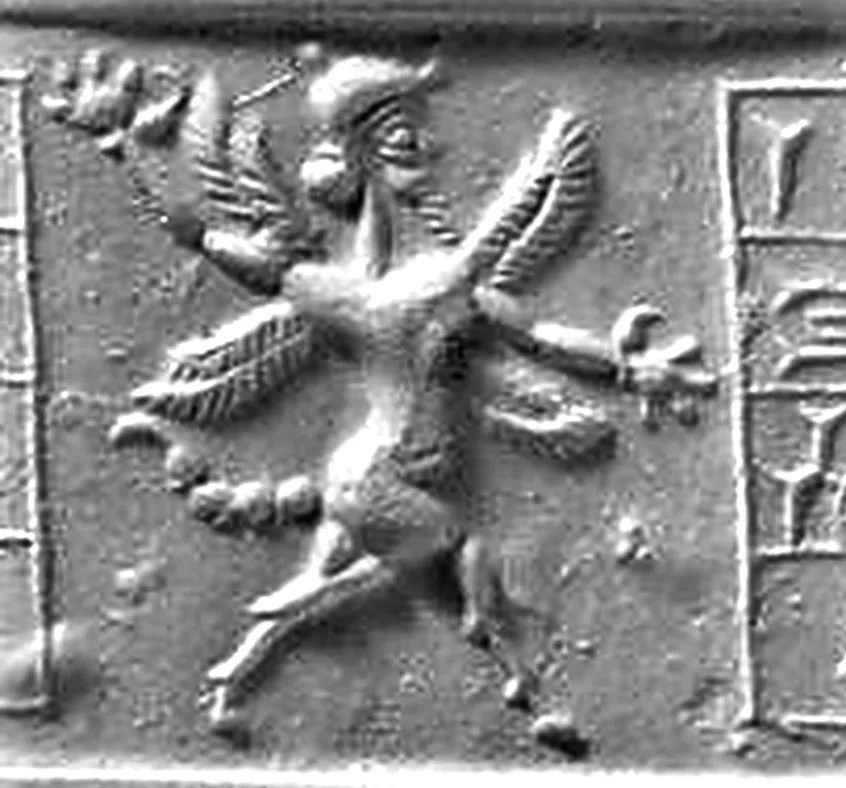
Figure 58 Scorpion-people Girtabluttû, “scorpion-man”
SUMMARY
In John’s vision he sees a star fallen from heaven and we note an important clue, “to him was given the key,” which means that he did not have it previously. We are going to see shortly how Jesus acquired this key. Nevertheless, at the time when Jesus declared that the Gates of Hades would not prevail, Satan still held the key to the Abyss (underworld). We have seen that Batios, representing Ninurta, Og, Melqart, Molech, Nergal, Pabilsag, etc., was the king of that domain. It is shocking to discover that the chimeric creatures described in Revelation 9 perfectly match Ninurta / Nergal, et al. (See Appendix 8 Joel’s Army).
Milestone Marker 2

Figure 59 Roman Milestone on the Road of the Patriarchs between Jerusalem and Hebron https://en.wikipedia.org/wiki/Creative_Commons.


 Facebook
 Twitter
 GooglePlus
 RSS
 Youtube
 Newsletter
 Email Me New Posts!
